
Introduction
For decades, a company’s IT backbone was viewed as static infrastructure-a necessary utility of servers, networks, and software that required constant maintenance and capital investment. The primary goals were to maintain uptime and control costs. Today, however, this perspective is fundamentally obsolete. We are now in a new era where technology must be a proactive strategic partner.
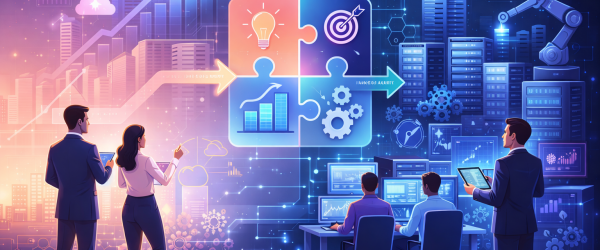
This shift marks the move from infrastructure to Intelligence. Modern business challenges-from AI disruption to sophisticated cybersecurity threats-demand that IT evolves from a cost center into an intelligent, adaptable core of the company. This IT transformation is not just an upgrade; it’s a complete reimagining of how technology fuels growth, innovation, and competitive advantage.
The Limits of the Traditional Infrastructure Model
The old model treats IT as a collection of physical and virtual components to be managed. Consequently, it leads to several critical limitations:
- Reactive, Not Proactive: Teams are stuck in a break-fix cycle, constantly responding to issues rather than preventing them.
- High Overhead, Low Agility: Significant resources are spent on maintenance, leaving little capacity for innovation. Scaling often requires slow, expensive hardware procurement.
- Data Silos, Not Insights: Infrastructure holds vast amounts of data, but without intelligence, it remains trapped and unactionable.
- Security Vulnerabilities: Static defenses struggle against dynamic, AI-powered cyber threats.
The Pillars of Intelligent IT
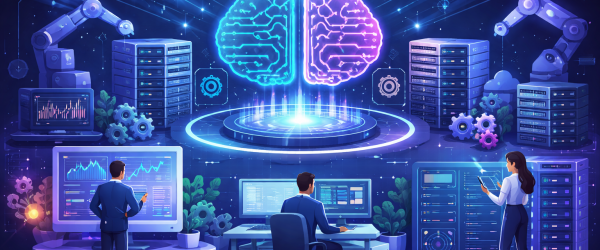
The new era is defined by intelligence baked into every layer of your technology stack. This digital transformation is built on several interconnected pillars.
1. AI-Ops and Predictive Analytics
Intelligent IT begins with visibility and foresight. AI-powered operations (AI-Ops) use machine learning to analyze data from your entire digital environment. This allows for:
- Predictive issue resolution before outages occur.
- Automated root-cause analysis to slash downtime.
- Intelligent resource allocation that optimizes performance and cost in real-time.
2. Software-Defined and Cloud-Native Architecture
Agility is engineered through abstraction. Intelligence replaces physical rigidity.
- Software-Defined Everything (SDx): Networks, storage, and security become agile, policy-driven services.
- Cloud-Native Development: Building applications as microservices in containers enables unprecedented scalability and resilience.
3. Embedded, Proactive Security (Zero Trust)
In an intelligent system, security is not a wall but an immune system. The Zero Trust model assumes no implicit trust, verifying every request.
- Security is automated and woven into the fabric of applications and data.
- AI constantly analyzes behavior for anomalies, enabling threat detection and response at machine speed.
4. Data Fabric and Democratization
Intelligence requires accessible, high-quality data. A data fabric creates a unified layer that connects disparate sources.
- It provides consistent governance and security across all data.
- This democratizes access, allowing teams to securely leverage data for analytics and AI, turning raw information into a strategic asset. Partnering with a specialist for Business Intelligence Solutions can accelerate this journey.
The Transformation Journey: From Static to Intelligent
| Stage | Traditional IT (Infrastructure) | Intelligent IT (Strategic Partner) |
| Mindset | Cost Center, Utility | Growth Engine, Differentiator |
| Operations | Manual, Reactive | Automated, Proactive & Predictive |
| Architecture | Siloed, Hardware-Centric | Integrated, Software-Defined & Cloud-First |
| Security | Perimeter-Based, Static | Identity-Centric, Adaptive (Zero Trust) |
| Data | Stored, Passive | Analyzed, Active & Democratized |
| Business Impact | Maintains Operations | Drives Innovation and New Revenue |
Your Roadmap to an Intelligent IT Foundation
Making this shift is a strategic journey, not a single project. Therefore, a phased approach is essential.
- Assess and Strategize: Conduct an audit of your current maturity. Define clear business outcomes for the transformation.
- Modernize the Core: Begin by migrating legacy systems to a flexible cloud or hybrid model. Implement core automation and monitoring.
- Infuse Intelligence: Integrate AI-Ops platforms. Start pilot projects that leverage data and automation for clear ROI.
- Cultivate a New Culture: Foster collaboration between IT, development (DevOps), and security (DevSecOps). Upskill teams for the new paradigm.
This journey often requires expert guidance. Engaging in strategic IT Consulting is crucial to building a coherent roadmap that aligns technology with business ambition.
Conclusion: Intelligence as the Ultimate Competitive Advantage
The transformation From Infrastructure to Intelligence is the defining business imperative of this decade. Companies that cling to the old model of IT will struggle with inefficiency and vulnerability. Conversely, those that embrace intelligent IT will unlock agility, resilience, and deep customer insights.
This new era is about building a self-optimizing, secure, and insightful technology core that doesn’t just support the business actively shapes its future. The question is no longer if you will transform, but how fast you can build your intelligent foundation.